
2,700 Licensed Operators, but Only About 15 Let You Box a Forecast
The UK gambling industry is one of the most heavily regulated and widely licensed in the world. The Gambling Commission’s public register lists approximately 2,700 active licence holders. That number includes casino operators, bingo providers, lottery companies, and betting shops — but the subset that matters to box bettors is much smaller. Only around 15 major online bookmakers offer the combination forecast and combination tricast as standard bet types on their horse racing platforms.
The limitation isn’t regulatory. There’s no rule preventing a bookmaker from offering combination bets. It’s commercial. Building and maintaining the bet-slip logic for permutation bets requires development investment, and operators serving casual markets — the pub slot machine punter, the Saturday accumulator bettor — see limited return on that investment. The result is that box bettors face a genuine platform constraint: your preferred bookmaker might not support the bet type that suits the race.
The market splits into three categories that function differently for box bettors. The Tote operates a pooled betting model where Exacta and Trifecta bets feed into shared pools, and dividends reflect the total pool size and distribution. Fixed-odds bookmakers like Bet365, William Hill, and Ladbrokes calculate payouts using the Computer Straight Forecast and Computer Tricast algorithms. And betting exchanges like Betfair don’t support direct forecast or tricast bets at all, requiring workarounds that rarely replicate the simplicity of a box bet. Understanding where to box — and what you gain or lose on each platform — is a practical decision that affects your returns before you’ve studied a single racecard.
Tote: The Pool Betting Specialist and What It Means for Box Bettors
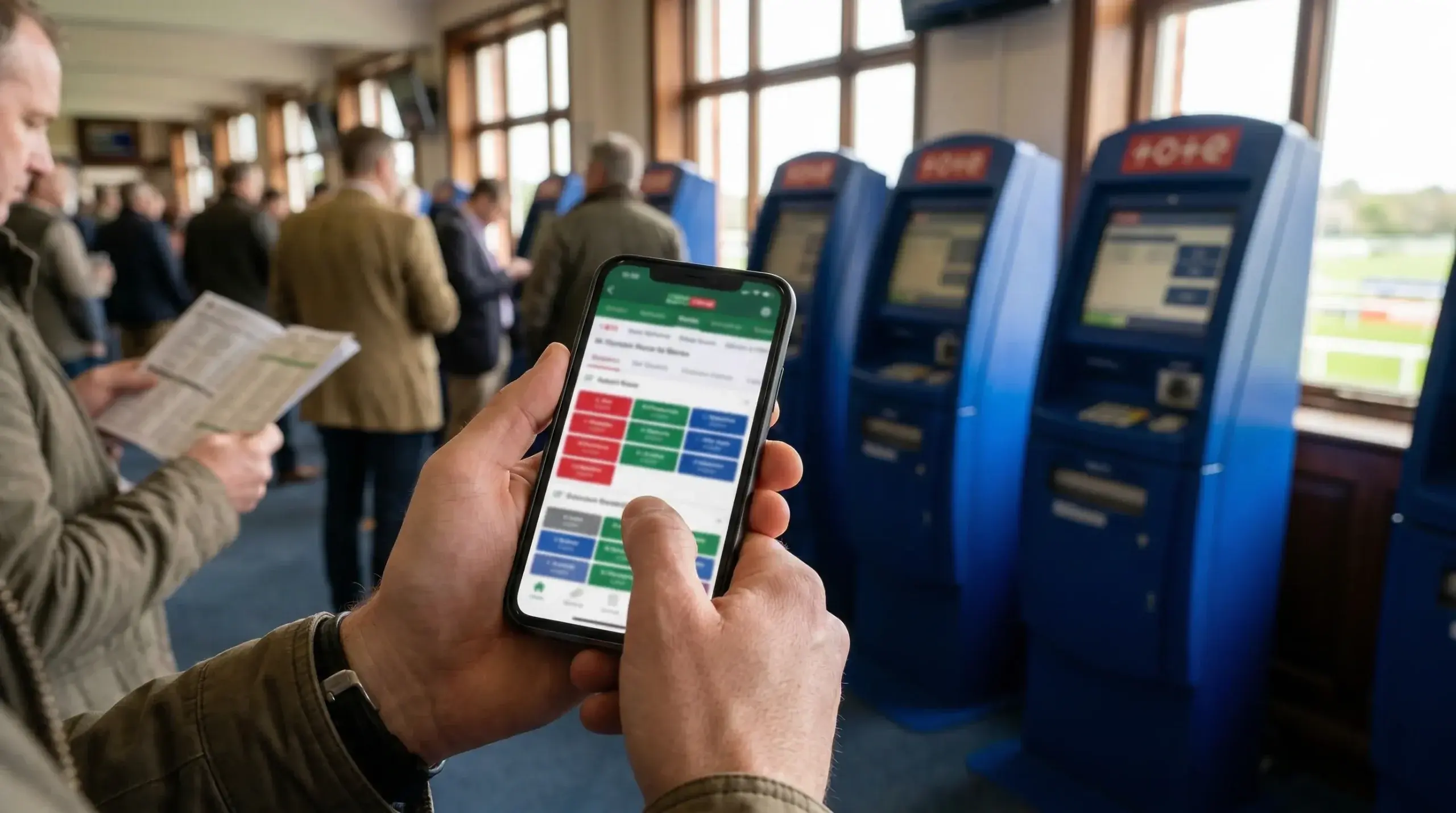
The Tote is the UK’s only licensed pool betting operator for horse racing. Relaunched in 2019 after a consortium led by Alizeti Capital acquired the business from Betfred (which had operated it under licence since 2011), the Tote processed over £600 million in betting turnover in 2023 across its racing pools — a figure that underlines its central position in the UK exotic bet market. For box bettors, the Tote is not just another platform. It’s a structurally different one, and that difference matters.
Pool betting works on a parimutuel model. All bets on a given market — say, the Exacta pool for the 3:15 at Cheltenham — flow into a shared fund. The Tote takes a commission (around 13 per cent on Win pools, rising to approximately 26 per cent on Exacta and Trifecta pools), and the remainder is distributed proportionally among winning ticket holders. If the Exacta pool totals £50,000 and only £200 was staked on the winning combination, the dividend will be substantial. If £10,000 was staked on the winning combination, the dividend compresses. The payout is determined not by an algorithm but by crowd behaviour — specifically, by how little of the pool backed the correct result.
This dynamic makes Tote Exacta and Trifecta pools particularly rewarding for box bettors targeting unexpected results. When a 25/1 shot beats a 33/1 shot in a handicap, the CSF at a fixed-odds bookmaker calculates a generous but algorithm-bounded figure. The Tote Exacta, drawn from a pool where almost nobody backed that combination, can pay significantly more. The reverse is also true: when two favourites fill the first two places, the Tote dividend is often lower than the CSF because most of the pool money was concentrated on that expected outcome.
“We’ve invested significantly in our Exacta and Trifecta pool products,” a UK Tote communications statement noted. “Punters can now box their selections across every UK meeting with minimum stakes from just 10p per line.” The investment appears to be paying off: Tote forecast and tricast transactions grew 14 per cent year on year in the 2023/24 financial year, reflecting increasing punter appetite for combination bets.
Pool liquidity is the critical variable. On a quiet Monday at Wolverhampton, the Exacta pool for a six-runner maiden might total £2,000 to £4,000. The dividend in this scenario is unstable — a single large bet can shift it dramatically. On festival days, the picture changes entirely. Tote Exacta pools at Cheltenham and Royal Ascot regularly reach £20,000 to £80,000 per race, with feature events exceeding £100,000. At these levels, the pool is deep enough for dividends to genuinely reflect the difficulty of the result rather than the quirks of a handful of bets.
The Tote also offers guaranteed minimum pools on selected races, typically announced in advance on their platform. These guarantees ensure a minimum pool size regardless of actual betting volume, providing a floor for the dividend. For box bettors planning around specific races, guaranteed pools remove the risk of targeting a race with an unexpectedly thin pool.
Practically, placing a box bet through the Tote is straightforward. Select your horses, choose Exacta or Trifecta, tick the combination option, and confirm. The bet slip calculates the total cost automatically. Minimum stake per line is 10p online for most products. On-course Tote terminals at UK racecourses set the minimum at £1 per unit for Exacta and Trifecta, which makes a five-horse box tricast a £60 proposition on course versus £6 online. This ten-fold difference is reason enough to place your boxes online rather than at the track, unless you’re specifically targeting the atmosphere of on-course Tote betting.
Fixed-Odds Bookmakers: CSF, CT, and Combination Bet Features
The major UK fixed-odds bookmakers — Bet365, William Hill, Ladbrokes, Coral, Paddy Power, and Betway among them — all offer forecast and tricast betting as part of their horse racing product. When you place a combination forecast or combination tricast with these operators, the payout is determined by the Computer Straight Forecast or Computer Tricast, algorithms that calculate a fair dividend based on the starting prices of the relevant horses.
The CSF and CT are not odds that you can see before the race. They are post-race calculations. You place your box, the race runs, and the algorithm determines what the dividend is based on the actual starting prices of the first two or three finishers. This means you’re betting without knowing your exact potential return at the point of placing the bet — a feature that distinguishes forecast betting from standard win or each-way wagering where the odds are visible before the off.
Minimum stakes vary by operator but converge around a standard. Most major UK online bookmakers accept a minimum of 10p per line on forecast and tricast bets. William Hill, Ladbrokes, and Coral all operate at this floor. Bet365 typically matches it. At 10p per line, a four-horse box forecast costs £1.20 and a four-horse box tricast costs £2.40 — stakes that make combination betting accessible to virtually any bankroll.
The bet slip experience differs meaningfully between platforms. Bet365’s horse racing interface, for example, presents the forecast and tricast options clearly within the bet slip once you’ve selected two or more horses. Ticking “combination forecast” generates the full permutation list and calculates total cost in real time. Ladbrokes and Coral use a similar flow. William Hill’s interface groups forecast bets under a “forecast” tab within the bet slip, which some users find less intuitive than a single-screen approach. None of these differences affect the mathematical outcome — the CSF pays identically regardless of platform — but the ease of placing the bet varies, and a confusing interface increases the risk of placing the wrong bet type accidentally.
One feature that some fixed-odds bookmakers offer, and others don’t, is best-odds comparison between the CSF and the Tote dividend. A small number of operators pay whichever is higher — the CSF or the declared Tote Exacta/Trifecta dividend — on selected races. This is not universal, and it’s typically restricted to feature races or promotional periods, but when available, it’s a genuine advantage for box bettors. You effectively get two shots at the better payout from a single bet, with no additional stake.
A practical limitation of fixed-odds operators: unlike the Tote, they don’t publish pool sizes or indicate how other bettors are wagering. Your CSF payout is algorithm-derived, so crowd behaviour doesn’t directly affect it — but it also means you have no visibility into whether a specific combination is overbet or underbet by the public. The Tote, by publishing pool distributions on feature races, provides a transparency layer that fixed-odds bookmakers don’t match.
Betfair, Smarkets, and Why Exchanges Don’t Support Direct Box Bets
Betting exchanges operate on a fundamentally different model from bookmakers. On Betfair or Smarkets, you’re not betting against the house — you’re betting against other punters. One user backs a horse (bets on it to win); another lays it (bets against it). The exchange matches the two sides and takes a commission on the winner’s profits. This peer-to-peer structure works elegantly for win markets. It does not work for forecasts or tricasts.
The reason is structural. A forecast or tricast is a bet on a specific finishing combination: Horse A first, Horse B second (and Horse C third for a tricast). For an exchange to offer this market, it would need a separate matching pool for every possible permutation. In a 16-runner race, that’s 240 forecast permutations and 3,360 tricast permutations. Each permutation would need sufficient liquidity on both the back and lay side. In practice, the betting public doesn’t generate enough volume on individual forecast permutations to make the market functional. You’d end up with thousands of empty or near-empty order books, and matching bets would be impossible for all but the most popular combinations.
Betfair has acknowledged this limitation. The exchange does not offer a direct box bet, combination forecast, or combination tricast product. The platform’s help documentation confirms that forecast and tricast markets are not available on the exchange. Instead, Betfair directs users interested in exotic bets toward its fixed-odds sportsbook, which does offer standard CSF and CT betting — but the sportsbook operates as a traditional bookmaker, not an exchange. You lose the exchange’s advantages (better odds, no margin) and gain the bookmaker’s forecast product.
Some exchange users attempt workarounds. The most common is constructing a synthetic forecast by placing multiple bets on individual outcomes: back Horse A in the win market and separately back Horse B to place. The problem is that these are independent bets, not a linked forecast. If Horse A wins and Horse B finishes second, both bets pay out — but the combined return is typically less than a CSF would have paid, because the individual win and place odds don’t compound in the same way the forecast algorithm rewards the specific combination. Worse, if Horse A wins and Horse B finishes fourth, you collect on the win bet but lose the place bet — a partial result that a proper box forecast wouldn’t produce.
Smarkets, the smaller UK exchange, follows the same pattern. No forecast markets, no tricast markets, no combination bet products. The exchange model and the permutation-based forecast model are architecturally incompatible. This isn’t a feature gap that exchanges are likely to close — it’s a fundamental design constraint.
The practical takeaway for box bettors: if you primarily use an exchange for your racing bets, you need a secondary account with either the Tote or a fixed-odds bookmaker to access combination forecasts and tricasts. There is no way to replicate a true box bet on an exchange, and the synthetic alternatives are inferior in both payout structure and simplicity. Treat the exchange as your platform for win and place betting, and use a bookmaker or the Tote for your box activity. Two platforms, two purposes, and no compromise on either.
Features That Matter: Minimum Stakes, Bet Builders, and Cash-Out
Beyond the basic question of whether a platform offers combination forecasts, several features differentiate the box betting experience across UK bookmakers. These aren’t headline features, and they rarely appear in operator marketing. But they affect the day-to-day mechanics of placing boxes, managing costs, and interacting with your bets post-placement.
Minimum Stakes
The industry standard for online forecast and tricast minimum stakes is 10p per line, and most major operators meet this floor. On-course Tote terminals set the minimum at £1 per unit, a tenfold increase that makes large boxes prohibitively expensive for casual racegoers. For regular box bettors, the 10p minimum is a crucial enabler: it turns a five-horse box tricast from a £60 commitment into a £6 one, making it feasible to box multiple races on a single card without breaking the session budget.
A few operators impose higher minimums on certain bet types or restrict low-stake forecasts to online-only. Before opening an account primarily for box betting, verify the minimum stake for combination forecasts and tricasts specifically — some platforms set lower minimums for standard win bets than for exotics.
Bet Builders and Exotic Integration
Bet builder products have become a central feature of modern UK sportsbooks, allowing punters to combine multiple selections within a single event into a custom bet. In football, this has been transformative. In horse racing, bet builders remain limited. No major UK bookmaker currently integrates forecast or tricast selections into a bet builder framework. You cannot, for instance, combine a box exacta with a “top jockey” or “winning distance” market in a single structured bet.
This limitation means that box bets remain standalone products on every platform. Your box forecast is a separate bet from your win single on the same race, and the two don’t interact. For punters accustomed to the flexibility of football bet builders, this feels restrictive. But it’s a product design constraint, not a regulatory one, and it’s possible that future platform updates will integrate exotic racing bets into multi-element builders. For now, the box bet exists in its own lane.
Cash-Out on Forecasts
Cash-out — the ability to close a bet before the event finishes and lock in a partial profit or cut a loss — is available on win and each-way markets at most UK bookmakers. For forecast and tricast bets, cash-out is generally not available. The CSF and CT are post-race calculations; there’s no live price to cash out against until the race has finished and the algorithm has run. The Tote doesn’t offer cash-out on pool bets either. Once your box is placed, it runs to completion. This is a feature gap for box bettors, but also a simplification: there’s no temptation to cash out early on a weak position, and no decision to make mid-race. The bet resolves when the horses cross the line, and the dividend is what it is.
Result Notifications and Payout Visibility
One underappreciated feature is how clearly the platform communicates box bet results. When a box bet wins, the settlement should show which specific permutation won and what the CSF or Tote dividend was. Some bookmakers display this clearly; others simply show a credit to your account without breaking down the winning combination. For punters tracking their box performance over time — which is essential for evaluating whether your selection process is working — clear settlement data is valuable. Check how your bookmaker presents forecast results before committing to the platform for regular use.
Choosing Your Platform: A Practical Checklist
Selecting a bookmaker for box betting is not the same as selecting one for general sports betting. The features that matter to an accumulator bettor — sign-up offers, acca insurance, best-odds guaranteed on win markets — are secondary to the specific functionality a box bettor needs. The checklist below covers the practical items worth verifying before you commit.
Does the platform offer combination forecasts and combination tricasts? This sounds obvious, but not every operator does. If the bet slip only shows “straight forecast” and “reverse forecast” without a combination option, you cannot box more than two horses. Check the horse racing rules section or place a test bet to confirm. Some operators list the feature under “multiple forecasts” or “permed forecast” rather than “combination” — the terminology is not standardised across platforms, which adds a layer of confusion that shouldn’t exist but does.
What is the minimum stake per line for exotics? The 10p standard is common but not universal. Confirm that the minimum applies to both forecasts and tricasts, and that it’s available for all UK meetings, not just feature races.
Does the platform support part-box or banker structures? A full box is available almost everywhere that offers combination bets. Banker forecasts and part-box tricasts — where you assign specific horses to specific finishing positions — require more sophisticated bet slip logic. Tote, Bet365, and William Hill generally support these structures. Some smaller operators don’t.
What payout mechanism is used? Fixed-odds operators pay the CSF or CT. The Tote pays pool dividends. Some operators offer both — typically by running their standard forecast product alongside a Tote integration. If you want access to both payout systems, check whether the platform lets you choose between CSF and Tote Exacta at the point of bet placement.
Is there a best-dividend guarantee? A small number of bookmakers pay the higher of the CSF and Tote dividend on selected races. This isn’t available everywhere, but where it exists, it’s a genuine advantage that costs you nothing. Check promotions pages and racing-specific terms.
How does the platform display results and settlements? Clear, detailed settlement that shows the winning permutation and the CSF or Tote dividend helps you evaluate your performance. Vague settlement screens that show only a credit amount make it harder to assess whether your selection process is working over time.
The ideal setup for a committed box bettor is two accounts: one with a fixed-odds bookmaker for CSF-based combination bets, and one with the Tote for pool-based Exacta and Trifecta bets. This gives you access to both payout mechanisms, the ability to compare dividends, and the flexibility to place your box where the conditions favour one system over the other. It’s a minor administrative overhead for a meaningful structural advantage — and in a market where finding the right platform is half the battle, that advantage compounds across every box bet you place.
One final consideration: account longevity. Some bookmakers restrict or limit accounts that show sustained profitability, particularly on exotic bet types where the margin is thinner. Box bettors who consistently target high-value handicaps and collect large CSF dividends may eventually face stake limitations. Having multiple active accounts is not just a convenience for accessing different payout systems — it’s a practical hedge against platform restrictions. Where to box is not a one-time decision. It’s an ongoing assessment that adapts as platforms evolve, promotions change, and your own betting volume grows.
Best UK Bookmakers for Box Bets — More on this topic at box bet horse racing.
See also What Is a Box Bet in Horse Racing? A Plain-English Explanation.
