
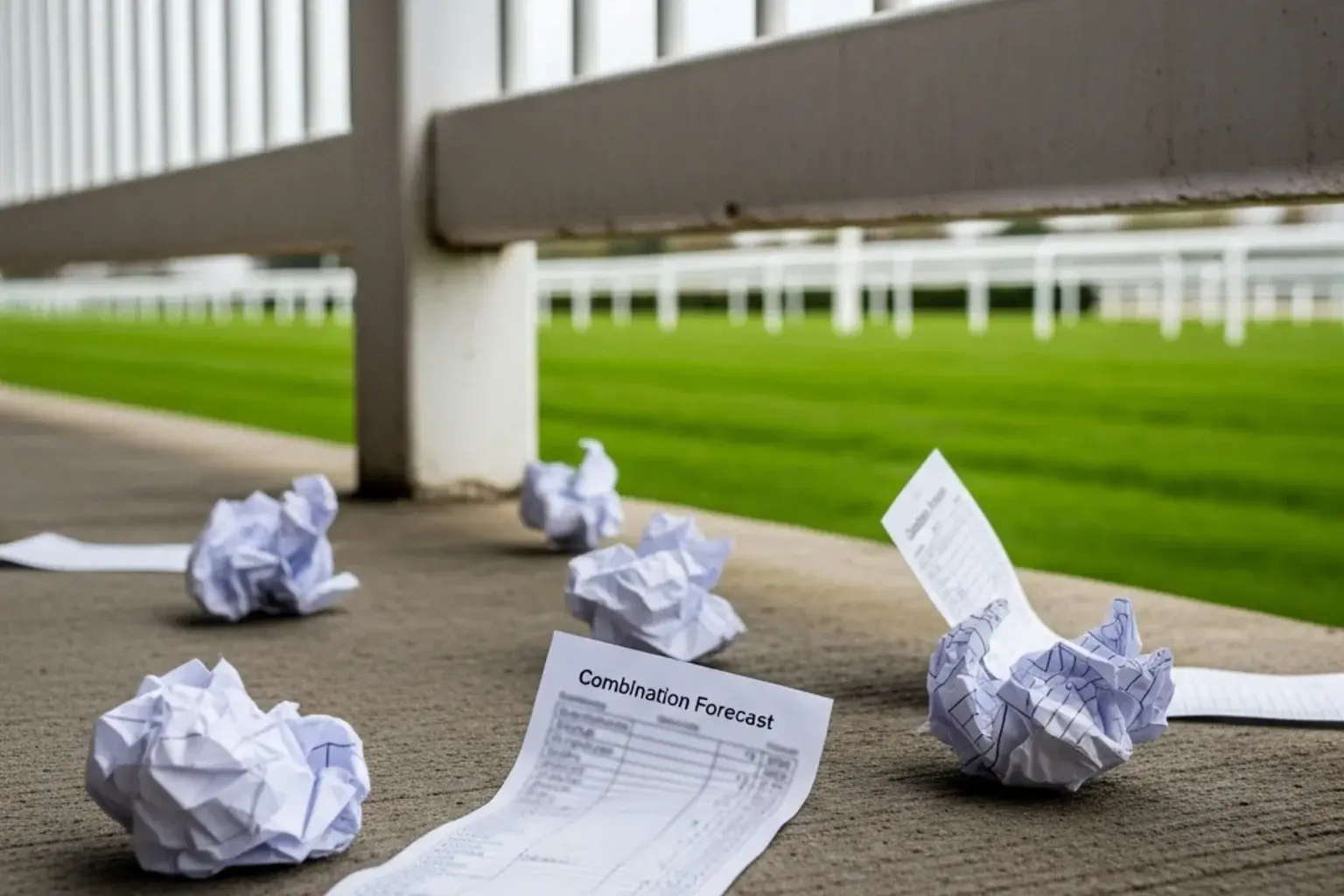
Most box bet losses don’t come from picking the wrong horses. They come from structural mistakes — boxing too many selections, targeting the wrong races, or ignoring the cost until after the bet is placed. The picks can be perfectly reasonable and the bet can still be wrong, because the framework around the picks was flawed. Box smarter, not wider — that’s the corrective, and the ten errors below are where it starts.
These aren’t theoretical. They’re the patterns that surface repeatedly in UK racing forums, betting communities, and the Gambling Commission’s consumer data, which estimates the average active horse racing bettor’s net loss at £200 to £400 per year. Box bettors who make several of these mistakes simultaneously can reach that figure in a matter of weeks.
The Ten Mistakes and Why They Cost You
Over-Boxing: Including Seven or More Horses
The single most expensive mistake. A seven-horse box tricast at £1 per line costs £210. At that outlay, you need a Computer Tricast dividend of at least £210 just to break even — and CT dividends in that range are common only in the largest-field handicaps. If you genuinely can’t narrow your shortlist below seven, the correct response is to reduce your unit stake or switch to a part-box structure, not to let the box expand until it consumes your budget.
Boxing in Small Fields
A box forecast on three horses in a six-runner race covers six of the 30 possible first-two permutations — 20 percent. The CSF dividend in a six-runner race, even if two outsiders fill the places, will rarely exceed £40. Your six-line box at £1 costs £6, so the profit ceiling is around £34. The maths works, but it’s thin. Boxing in fields smaller than ten runners produces marginal returns that don’t justify the bet’s structural cost over a long series. Save your box bets for handicaps with 12 or more runners, where the dividends reflect genuine difficulty.
Ignoring the Total Cost Before Betting
This sounds elementary, but bookmaker interfaces make it easy to select horses and hit “place bet” without pausing to register the total outlay. A five-horse box tricast is 60 permutations. At the minimum online stake of 10p per line, that’s £6 — manageable. At £1 per line, it’s £60 — not manageable for everyone. The fix is simple: calculate the cost before selecting the bet type. Permutation count times unit stake. Every time.
Betting on Non-Handicaps
Conditions races, Group races, maiden stakes — these race types produce small fields and predictable finishing orders. The forecast dividends are correspondingly modest. A box forecast on a five-runner Group 1 at Ascot might cost £20 and return £25 if it lands. That’s a 25 percent return on investment for a bet that will lose more often than it wins. Handicaps are the natural habitat of the box bet because the BHA’s handicapping process creates competitive fields where the finishing order is genuinely uncertain.
No Staking Plan
Boxing without a predefined staking plan is like driving without a fuel gauge. You don’t know how much you’ve spent until it’s gone. The specifics of the plan matter less than having one: fixed unit stake, percentage of bank, session budget — pick one and stick to it. The absence of a plan is what allows every other mistake on this list to compound.
Chasing Losses by Widening the Box
After three losing box bets, the instinct is to add more horses to the next box — cast a wider net, increase the probability of a hit. This is the most expensive form of chasing. Adding a fifth horse to a four-horse box tricast doubles the permutation count from 24 to 60. The probability of landing increases, but the cost increases faster, and the dividend per winning line stays the same. If you’re losing, tighten the box. Don’t widen it.
Boxing Without Studying the Form
A box bet is not a substitute for form analysis — it’s a structural overlay on top of it. Picking five horses at random from a 16-runner handicap gives you a 1.79 percent chance of landing the tricast. Picking five horses after studying form, course records, trainer patterns, and going preferences pushes that probability meaningfully higher. The box covers the order; you still need to supply the selections. Treating the box as a lucky dip is an expensive way to learn this lesson.
Allocating Your Entire Budget to a Single Box
One five-horse box tricast at £1 per line costs £60. If that’s your entire budget for the day, one losing bet ends your session. Spreading the same £60 across four-horse box tricasts at 20p per line on three different races — £4.80 per race, totalling £14.40 — gives you multiple chances, leaves budget in reserve, and diversifies your risk across different races, fields, and conditions. Concentration in a single box is a common mistake among punters who overweight one particular “banker” race.
Using Betfair Exchange for Forecasts
Betfair Exchange does not support direct combination forecast or tricast bets. Punters who try to replicate a box bet on the Exchange through multiple individual back bets are working against the Exchange’s commission structure and missing the CSF/CT settlement that makes combination bets attractive. The minimum online stake at most traditional bookmakers is just 10p per line — there is no cost barrier to using the right platform for the right bet type.
Ignoring the Tote Alternative
Fixed-odds bookmakers settle forecasts and tricasts via the CSF and CT algorithms. The Tote settles via pool dividends. These two systems frequently produce different payouts for the same result, and the Tote often pays more on surprise results where few punters backed the winning combination. Ignoring the Tote means accepting whatever the algorithm offers without checking whether the pool would have been more generous. On festival days with large Tote pools, this oversight can cost real money.
The Quick-Fix Checklist
Before every box bet, run through five checks. First, is the field large enough? Twelve runners is the minimum threshold for attractive box economics. Second, is it a handicap? Handicaps generate the competitive fields that produce meaningful dividends. Third, have you calculated the total cost? Permutations times unit stake, confirmed before you place the bet. Fourth, does the cost fit within your staking plan? If it exceeds your cap, reduce horses or reduce stake — don’t override the plan. Fifth, have you checked both CSF-settling bookmakers and the Tote for the same race? The best payout might not come from your default platform.
None of these checks requires advanced knowledge. They require discipline and a willingness to say no to a box bet that doesn’t meet the criteria. The punters who treat box betting as a structured exercise, rather than an instinctive punt, are the ones whose annual figures stay on the right side of the ledger.
If you catch yourself making three or more of the mistakes above regularly, stop boxing entirely for a week. Go back to simple win and each-way bets, rebuild your process, and return to combination forecasts and tricasts only when you’ve internalised the checklist. Box betting is a precision tool. Used carelessly, it’s just a more expensive way to lose.
Common Box Bet Mistakes — More on this topic at box bet horse racing.
See also Box Bets at the Cheltenham Festival.
