
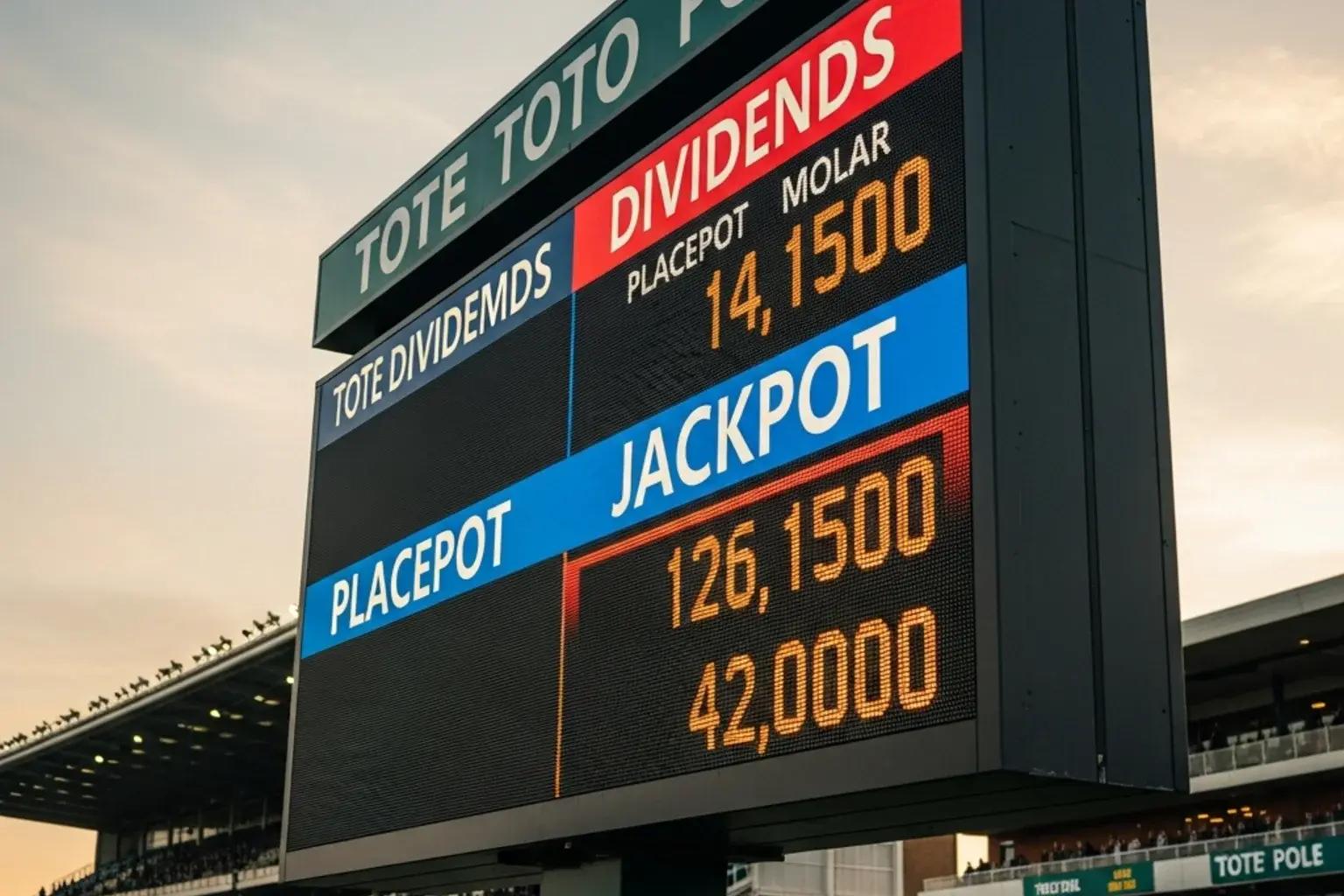
Box exacta and trifecta bets operate within a single race — pick the first two or three finishers, cover the permutations, collect the dividend. The Tote Placepot, Jackpot, Quadpot, and Scoop6 extend the exotic concept across multiple races on the same card, creating multi-leg pool bets with dividends that can dwarf anything a single-race forecast or tricast produces. The box is just the beginning.
The Placepot is the most popular of these, with pools reaching £100,000 to £500,000 on major festival days. “The Tote pools have seen significant growth in exotic bets since our relaunch,” the UK Tote Group noted in a 2024 briefing. “Exacta and Trifecta pools are deeper and more liquid than ever, making combination bets more attractive for punters.” That growth extends to the multi-race products, where increased participation means bigger pools, more stable dividends, and stronger incentives for punters who already understand the combination mindset from box betting.
If you’re comfortable boxing horses in forecasts and tricasts, these four Tote products are the natural next step — each with its own mechanics, cost structure, and place in a broader exotic betting strategy.
The Placepot: Six Races, One Placed Horse Per Race
The Placepot requires you to select at least one horse to finish in the places — typically the first three or four, depending on the field size — in each of the first six races on a card. If all six of your selections place, you win a share of the Placepot pool. The minimum stake is £1 per line, and the cost depends on how many horses you select per race: one horse per race equals one line at £1; two horses in one race and one in the other five equals two lines at £2; and so on. The permutations multiply across legs, so three horses in each of six races produces 729 lines at £729 — which is why most Placepot punters use one or two selections per race and accept the limited coverage.
The Placepot’s appeal for box bettors is its place requirement rather than a win requirement. You don’t need your horses to win — just to finish in the frame. This lowers the difficulty threshold per leg and makes the bet feel achievable, which is part of what drives its popularity. The dividends vary enormously: on days when the favourites all place, the Placepot might return £15 to £30 for a £1 stake. On days when outsiders fill the places in two or three legs, the dividend can exceed £1,000 and occasionally reaches £5,000 or more.
The strategic overlap with box betting is real. If you’re already analysing six races on a card to identify box forecast and tricast candidates, you have the raw material for a Placepot entry. Your shortlist of three or four contenders per race — the same group you’d box for a forecast — provides the Placepot selections. The difference is scope: the box bet asks for precise positioning within one race; the Placepot asks for placed finishes across six.
Jackpot and Quadpot: Win and Place Across Multiple Races
The Tote Jackpot
The Jackpot requires you to pick the winner of each of the first six races on a card. Not placed — the winner. This is substantially harder than the Placepot, and the dividends reflect that difficulty. Jackpot dividends of £10,000 or more are not uncommon on days when the results go against the market, and rollovers — where no one picks all six winners — can push the pool into six figures.
The cost structure mirrors the Placepot: £1 per line, with permutations multiplying across legs. Two selections in one race and one in each of the other five produces two lines. Three selections in two races and one in four produces nine lines. The Jackpot punishes wide coverage because the win requirement makes each leg harder than the Placepot’s place requirement, and the cost of covering multiple horses per leg escalates quickly.
The Tote processed over £600 million in total pool bets in 2023, and the Jackpot — while a smaller component than the Placepot — contributes meaningful volume on Saturdays and festival days. For box bettors, the Jackpot is a higher-variance cousin of the Placepot: same multi-race structure, but with a win requirement that compresses the number of viable entries and amplifies the dividend when you get through.
The Quadpot
The Quadpot is the Placepot’s shorter sibling: pick a placed horse in each of the last four races on a card rather than six. The smaller number of legs makes it cheaper (fewer permutations) and easier to win (fewer legs to survive), but the dividends are correspondingly smaller. A typical Quadpot returns £20 to £100 on standard days, with occasional larger payouts when the last four races produce surprises.
The Quadpot suits punters who arrive at a meeting mid-card or who prefer to focus their analysis on the afternoon’s feature races rather than the full six-race sequence. It’s a low-cost entry point to multi-race exotic betting — and for box bettors testing the waters beyond single-race forecasts, it’s a sensible first step.
The Scoop6: Saturday’s Biggest Exotic Pool
The Scoop6 is the Tote’s flagship Saturday product: pick the winner of six nominated races across the day’s ITV-televised meetings. The minimum stake is £2 per line, the races are hand-picked for difficulty, and the pool carries a bonus fund that accumulates across weeks when no one selects all six winners. The bonus fund has exceeded £1 million on multiple occasions, making the Scoop6 the highest-potential exotic bet in UK racing.
Winning the Scoop6 requires navigating six win selections across different meetings — often including feature handicaps with large fields, Group races at the major courses, and big-field hurdle races during the jump season. The difficulty is extreme, and the number of winning tickets on any given Saturday is usually zero or single digits. When someone does win, the dividend is substantial: Scoop6 payouts of £50,000 to £500,000 have been recorded, and the bonus fund adds a second-week element where the previous week’s winners nominate a horse in a specified race for an additional lump sum.
For box bettors, the Scoop6 represents the far end of the exotic spectrum: maximum variance, maximum potential, maximum difficulty. It shares the combination mindset — you’re covering multiple outcomes across a complex set of races — but the scale is different. Where a box tricast involves one race and 24 to 60 permutations, the Scoop6 involves six races and as many permutations as your budget allows. Most recreational punters play the Scoop6 as a once-a-week lottery-style punt at £2 or £4, accepting the long odds in exchange for the dream payout. Serious exotic bettors treat it as the capstone of a Saturday strategy that starts with box forecasts and tricasts on individual races and ends with a small Scoop6 entry funded from the day’s budget.
The progression is logical: master the single-race box bet, build proficiency with the Placepot and Quadpot, and add the Scoop6 as the high-ceiling play when your analysis and budget support it. Each product builds on the same skill set — identifying contenders, managing cost across permutations, and accepting variance in exchange for asymmetric payouts. The box is where you learn. The multi-race exotics are where you scale.
Beyond Box Bets — More on this topic at box bet horse racing.
See also UK Horse Racing Calendar for Box Bettors.
