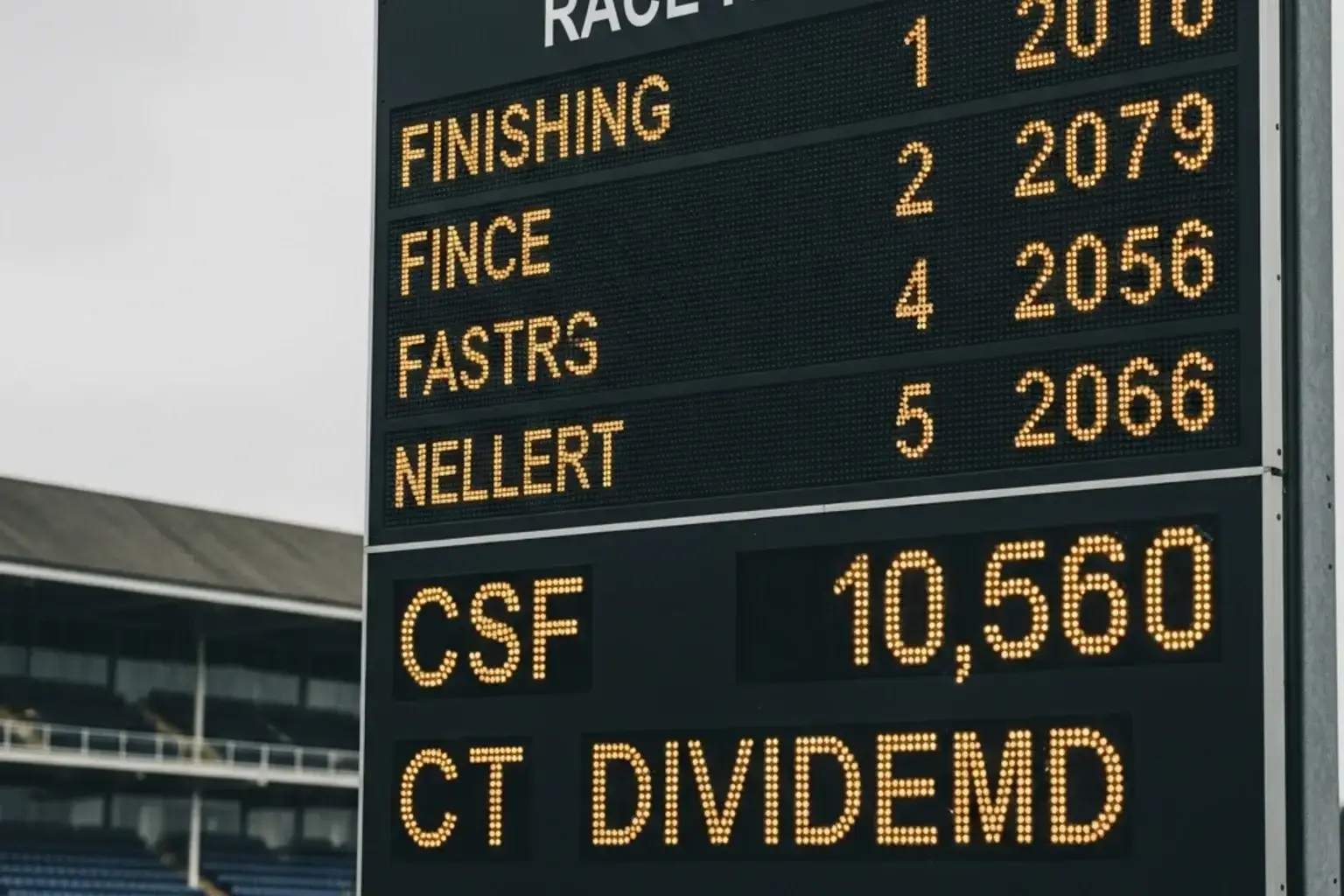
The CSF — Computer Straight Forecast — and the CT — Computer Tricast — are the two algorithms that determine how much you get paid when a forecast or tricast bet wins with a traditional UK bookmaker. They are not pools. They are not negotiated odds. They are mathematical formulas that take the starting prices of the finishing horses and output a dividend, applied identically across every bookmaker that settles on these terms. If you place combination forecasts or tricasts in UK racing and you don’t understand how these algorithms work, you’re betting blind on the payout side of the equation.
The distinction matters because the UK operates a dual system. The Tote pays pool dividends — where the payout depends on total stakes in the pool and the number of winning tickets. Bookmakers pay CSF and CT dividends — where the payout is calculated algorithmically and is entirely independent of what anyone else bet. Two identical box forecasts on the same race, one placed with a bookmaker and one placed through the Tote, will almost always return different amounts. Understanding why is the algorithm behind the dividend.
How the CSF Is Calculated: Starting Prices In, Dividends Out
The Computer Straight Forecast was introduced to British racing as a standardised settlement method for forecast bets. Before the CSF, forecast dividends were returned from pools operated at individual racecourses, which produced wildly inconsistent payouts. The CSF replaced that patchwork with a single algorithm applied nationally.
The algorithm uses the official starting prices of the first and second finishers as its primary inputs. The exact formula is proprietary in its fine detail, but its logic is well understood: it models what a theoretical fair pool would have returned given the SPs of the placed horses, after adjusting for overrounds and market structure. In practice, this means the CSF dividend for a given result is determined by how unlikely that result was according to the market. Two short-priced horses filling the first two places produces a low CSF. Two long-priced horses produces a high one.
The ranges are wide. CSF dividends on UK races span from as low as £5 or £6 — when the first two in the market finish first and second — to well over £250 in handicaps with 16 or more runners where the first two finishers went off at double-figure prices. For box forecast punters, this range defines the economics of the bet. A four-horse box forecast costs £12 at a £1 unit stake. If the CSF returns £15, the profit is £3. If it returns £120, the profit is £108. The same cost, radically different outcomes, determined entirely by which of your selections fills the places and at what SP.
One feature of the CSF that experienced punters appreciate: it’s immune to pool manipulation. Because the dividend is algorithmically derived from SPs, no amount of money placed by other punters on the same forecast can dilute your return. In a Tote pool, if a popular combination wins, the pool is split among many winning tickets and the dividend shrinks. With CSF, a popular result pays the same as an unpopular one, provided the SPs are identical. This makes the CSF a more predictable settlement method — and, for disciplined box bettors, a more plannable one.
How the Computer Tricast Extends the CSF to Three Positions
The Computer Tricast applies the same algorithmic logic to three finishing positions instead of two. The inputs are the starting prices of the first, second, and third finishers, and the output is a dividend that reflects the combined improbability of that exact finishing order.
Because a tricast requires predicting three positions rather than two, the CT dividends are substantially higher than CSF dividends for the same race. The relationship isn’t a simple multiple — it depends on the individual SPs — but as a rough guide, CT dividends in competitive handicaps typically run at 10 to 30 times the CSF dividend for the same race. If the CSF pays £80, the CT might pay £1,200. If the CSF pays £200, the CT could return £4,000 or more. Computer Tricast dividends for handicap races with 12 or more runners regularly sit in the £500 to £5,000 range, with outliers pushing above £10,000 when three outsiders fill the places.
The CT is available on all UK races with eight or more runners, which is the minimum field size for tricast betting. Below eight runners, bookmakers typically do not offer tricast settlement. This threshold matters for box tricast punters: if a race is declared with nine runners and one is a late withdrawal, the field drops to eight and the tricast remains available. If two are withdrawn, the field drops to seven and the tricast is void. Always check the final declarations before committing to a box tricast on a race near the threshold.
Settlement timing follows the same pattern as the CSF. The CT dividend is declared after the race, once the official starting prices and finishing positions are confirmed. Your return is the CT dividend multiplied by your unit stake on the winning line. The other lines in your box — the ones where the finishing order didn’t match — pay nothing. The total profit is the winning dividend minus the total cost of all lines in the box.
CSF vs Tote: When the Pool Pays More and When the Algorithm Wins
The Tote’s Exacta and Trifecta pools operate on a fundamentally different basis. All stakes go into a pool, the operator takes a percentage — typically around 20% for the Tote’s Exacta pool — and the remainder is divided among winning tickets. The dividend depends on two things: the total size of the pool and the number of punters who backed the winning combination. A popular result in a large pool pays less per winning ticket. An unpopular result in the same pool pays more.
This creates a systematic difference between Tote and CSF payouts. When the first two finishers are heavily backed — a favourite winning with the second favourite in second — the Tote Exacta tends to pay less than the CSF, because the pool is diluted by the many punters who backed that combination. When the result is a surprise — two unconsidered outsiders — the Tote Exacta often pays more than the CSF, because very few winning tickets exist to share the pool.
For box bettors, this difference suggests a tactical split. If your box includes mostly well-fancied horses and you’re hoping for a “form” result, the CSF — paid by traditional bookmakers — will typically give you a better return than the Tote. If your box includes one or two outsiders and you’re fishing for a surprise, the Tote Exacta or Trifecta pool may offer a larger dividend when those outsiders come in. Festival days amplify this effect, because Tote pool sizes swell into the tens of thousands of pounds, creating more liquidity and more extreme dividends for unpopular results.
There is no universal rule about which system pays better. The advantage shifts race by race. What you can do is be aware of the difference and, where your platform allows it, check both the CSF and the Tote dividend after a race to understand which would have favoured your box. Over time, this builds a practical sense of when to direct your box bets through the Tote versus a fixed-odds bookmaker — and that knowledge, compounded across dozens of bets, has a real effect on returns.
CSF and Computer Tricast Explained — More on this topic at box bet horse racing.
See also Articles.
