
The history of forecast betting in the UK begins in 1928, when Winston Churchill — then Chancellor of the Exchequer — signed the Racecourse Betting Act that created the Horserace Totalisator Board, giving Britain its first legal framework for pool betting on horse racing. From that single legislative act, nearly a century of forecast and tricast betting evolved — through manual pool calculations, the introduction of algorithmic settlement, privatisation, collapse, and relaunch. The system that exists in 2026, where UK punters can choose between an algorithmic CSF from a bookmaker and a pool dividend from the Tote for the same combination bet, is the product of that specific history. No other country’s exotic betting market works quite the same way, and the reason is traceable to decisions made at every stage of the journey.
The Horserace Betting Levy Board’s record levy yield of £97.5 million in the 2023/24 financial year — a figure to which exotic bets contribute meaningfully — is the current endpoint of a century of forecasting the finish.
1928 to 1990: The Tote Era and the Birth of Pool Forecasts
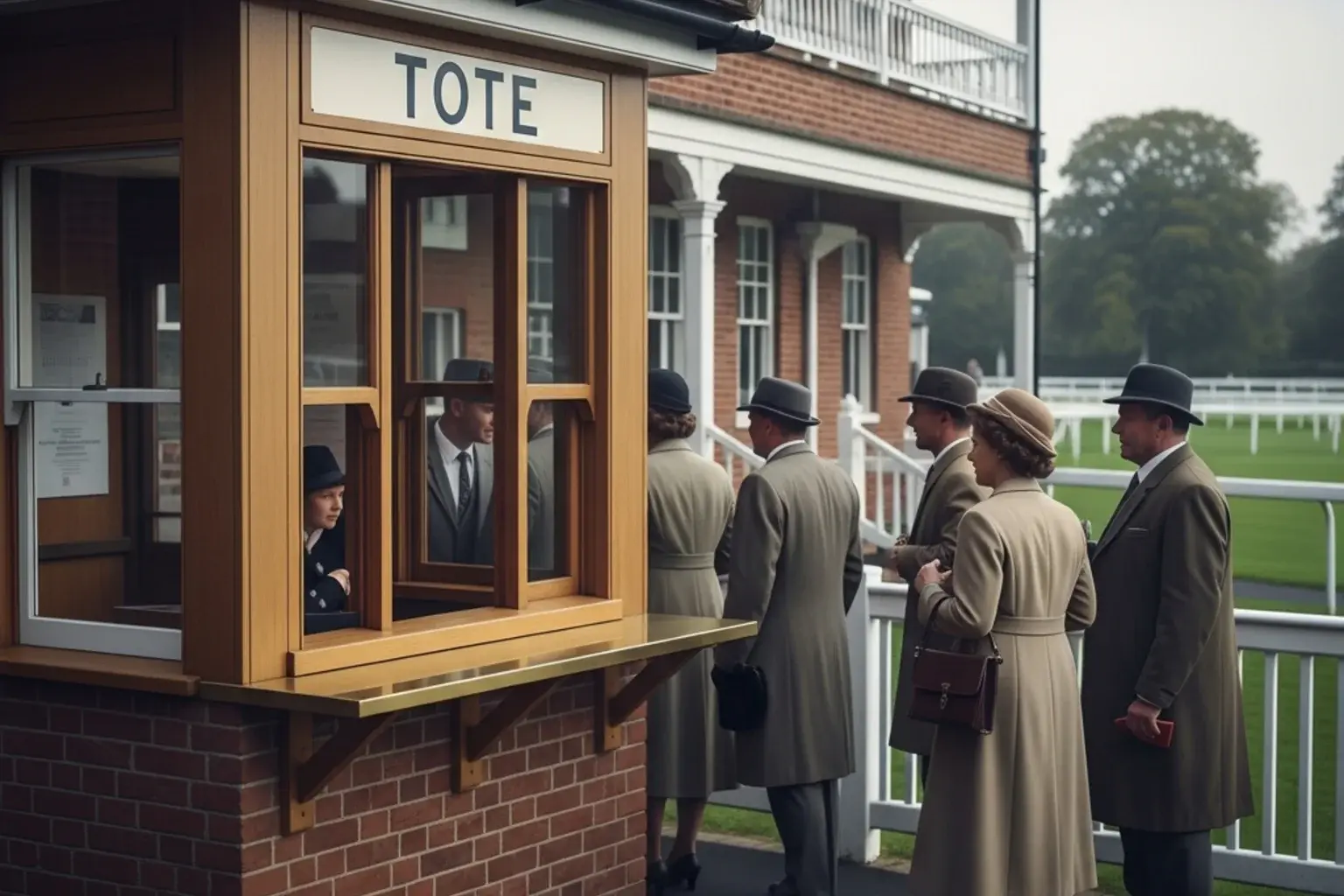
The Horserace Totalisator Board — universally known as the Tote — began operations in 1929 at Carlisle and Newmarket racecourses. The concept was borrowed from the French pari-mutuel system: punters placed bets into a central pool, a percentage was deducted for the operator and the sport, and the remainder was divided among those holding winning tickets. The Tote’s initial products were simple win and place pools, but forecast betting — requiring the selection of the first two finishers — followed within the decade.
The early forecast pools were small, localised, and manual. Each racecourse operated its own Tote windows, tickets were handwritten or mechanically stamped, and the dividend calculation happened after the race using adding machines and human arithmetic. The pools were course-specific: a forecast bet placed at Newmarket contributed to the Newmarket pool and nowhere else. Dividends varied wildly between courses, even for identical results, because the pool sizes were different. A popular result at a well-attended Ascot meeting might pay £8 for a £1 forecast. The same result at a sparsely attended Monday meeting at Catterick might pay £45, because the pool was smaller and fewer punters had backed the combination.
This fragmentation persisted for decades. Through the 1950s, 1960s, and 1970s, the Tote expanded its product range and its footprint across British racecourses, but the fundamental structure — course-by-course pools with localised dividends — remained. The tricast arrived in this period as an extension of the forecast: pick the first three finishers instead of two, with the pool and dividend mechanics identical but the difficulty and payout substantially higher.
The Tote during these decades operated as a statutory body, a government-owned entity with a monopoly on pool betting at racecourses. It returned its profits to the racing industry through direct funding of prize money, racecourse improvements, and other spending. This monopoly position meant there was no competitive pressure to innovate the product — the Tote’s forecast and tricast pools changed little in structure from the 1930s to the 1990s.
The CSF Revolution: When Algorithms Replaced Pools for Bookmaker Bets
The transformation came when traditional bookmakers — the firms that operate at racecourses and, increasingly from the 1980s onward, in high-street betting shops — decided to offer forecast betting in competition with the Tote. The problem was structural: bookmakers didn’t operate pools. They took bets at fixed odds and settled individually. A forecast bet with a bookmaker couldn’t be settled through a pool, because the bookmaker’s entire business model was based on individual bet settlement rather than collective pooling.
The solution was the Computer Straight Forecast — an algorithm that takes the starting prices of the first and second finishers and calculates a dividend that approximates what a fair, well-attended pool would have returned. The CSF was introduced in the early 1980s and rapidly became the standard settlement method for forecast bets placed with bookmakers. The Computer Tricast followed, applying the same algorithmic logic to three finishing positions.
The CSF’s introduction fundamentally changed the competitive landscape. Punters now had a choice: place a forecast bet through the Tote (pool dividend) or through a bookmaker (CSF dividend). The two methods produced different payouts for the same result, creating an arbitrage-like dynamic where alert punters could compare the two and choose the better return. The introduction of the offshore levy for bookmakers serving UK horse racing bettors — which brought an additional £25 million per year into the sport from 2024 — ensured that both settlement channels contributed to British racing’s funding.
The CSF also democratised forecast betting. Before its introduction, forecast bets were primarily a racecourse activity — you had to be on-course to access the Tote. With bookmakers offering CSF-settled forecasts in their shops and, later, online, combination betting became available to anyone with a betting account. This expansion of access drove the growth in exotic bet volumes that continues today.
2019 to Present: The Tote Relaunch and the Digital Pool Era
The Tote’s journey through the early 21st century was turbulent. In 2011, the government sold the Tote to Betfred for £265 million, ending its 82-year run as a state-owned entity. Under Betfred’s ownership, the Tote continued to operate but with reduced investment and declining public profile. Pool sizes shrank, and the product range stagnated.
The turning point came in 2019, when a consortium led by Alizeti Capital acquired the Tote from Betfred and relaunched it as an independent entity — the UK Tote Group. The relaunch brought new technology, a redesigned website and app, guaranteed minimum pools, and an aggressive marketing campaign to reintroduce pool betting to a generation of punters who had grown up with bookmaker CSF settlement as the default.
The results have been significant. Tote forecast and tricast transaction volumes grew 14 percent year on year in 2023/24, and total Tote pool turnover exceeded £600 million across UK racecourses. The relaunch of the Tote has revitalised pool forecast and tricast betting in the UK, creating a genuine two-system market where punters can choose between algorithmic and pool settlement for every combination bet they place.
The modern UK forecast and tricast market is the product of this layered history: a pool system born in 1928, an algorithmic alternative born in the 1980s, a privatisation cycle through the 2010s, and a relaunch in 2019 that restored competition between the two. For box bettors, the result is a market with more settlement options, deeper pools, and more consistent algorithmic dividends than at any previous point. Nearly a century after Churchill’s legislation created the framework, the infrastructure for combination betting in British racing is more developed, more accessible, and more liquid than it has ever been.
That history also explains a peculiarity of UK racing that visitors from other markets find puzzling: why are there two parallel systems for paying the same bet? The answer is path dependency. The Tote came first, as a monopoly pool operator. The CSF came second, as a bookmaker innovation to compete without pools. Neither displaced the other because each serves a different segment of the market — the Tote for punters who want pool dynamics and the possibility of outsized dividends on surprise results, the CSF for punters who want algorithmic consistency and immunity from crowd behaviour. Two systems, coexisting, each with its own logic — and the box bettor who understands both has an advantage that didn’t exist anywhere else in the world’s racing markets until Britain, by historical accident, created it.
A Brief History of Forecast and Tricast Betting in British Horse Racing — More on this topic at box bet horse racing.
See also Box Superfecta in Horse Racing.
