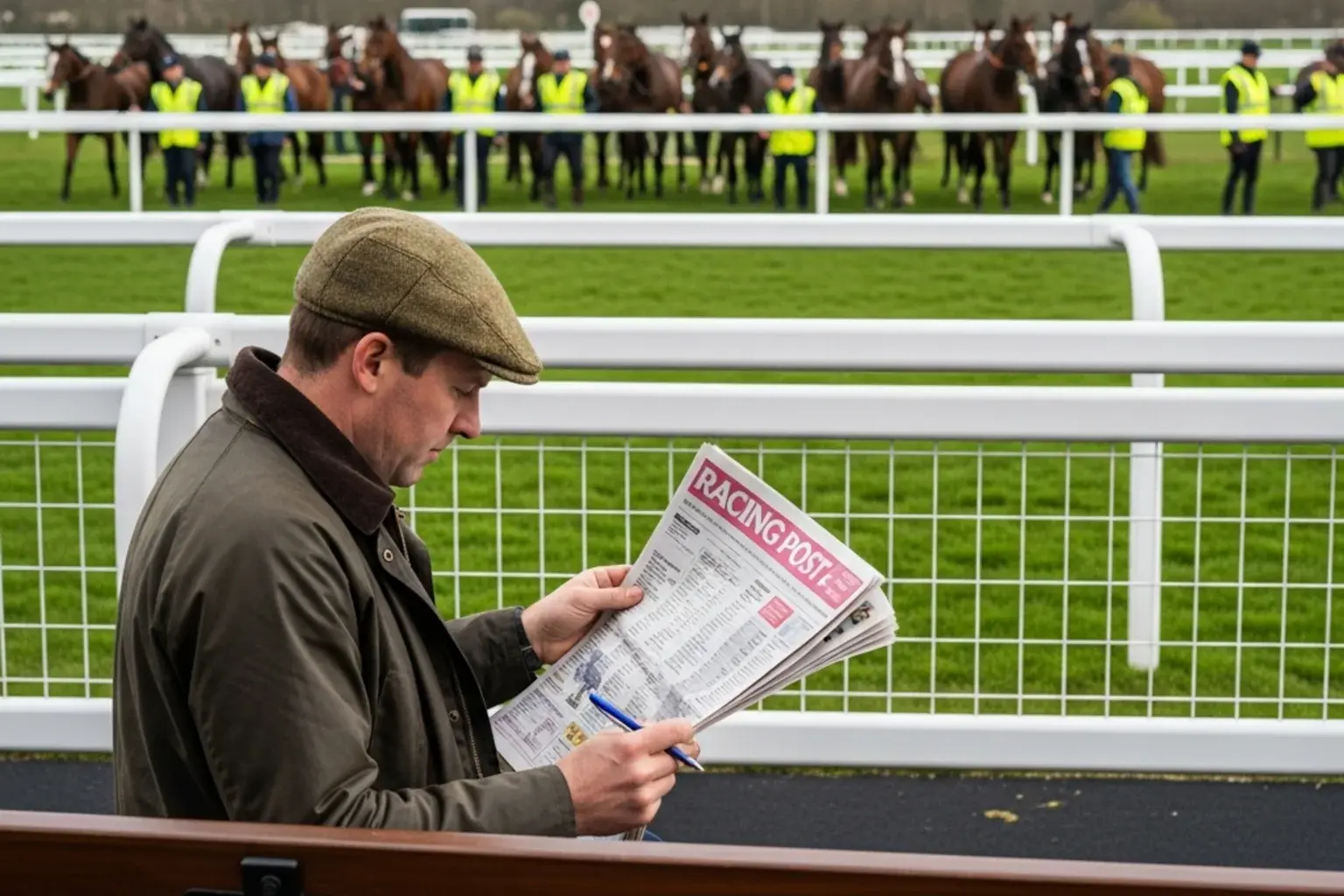
Most Box Bet Guides Stop at Definitions — Strategy Starts Where They End
Box bet strategy for horse racing begins with a single question: how many horses in this race can realistically finish in the first two or three places, and can you name them more accurately than the market? If the answer to the second part is no, boxing the race is a donation. If the answer is yes — even marginally — the permutation structure of a box bet converts that small edge into a meaningful return.
Most guides explain what a box bet is. They walk through the formula, show a cost table, and stop. That’s useful for a first-time bettor, but it’s not strategy. Strategy is knowing when to box and when to pass. It’s understanding which field sizes reward the approach, which race types punish it, and how to size your stakes so that the inevitable losing runs don’t empty your account before the winning ones arrive.
The data provides a starting point. According to Timeform’s statistical analysis, market favourites win approximately 33 per cent of UK flat races and around 29 per cent of National Hunt races. That means roughly two-thirds of all races are won by something other than the shortest-priced horse. For a box bettor, this is the foundational number. It tells you that the market’s top pick fails more often than it succeeds, which creates space for a bet type designed to cover multiple contenders. The question is not whether the opportunity exists — it clearly does — but how to capture it without overspending on coverage you don’t need. That’s where your edge is.
The Field-Size Framework: When Boxing Makes Mathematical Sense
Field size is the single most important variable in deciding whether to box a race. It governs the number of possible permutations, the likely dividend range, and the ratio between your outlay and the potential return. Get the field-size assessment right and the rest of the strategy falls into place. Get it wrong and you’re either overspending on small fields that don’t generate meaningful dividends or under-covering large fields where the opportunity is real.
The framework breaks into four zones.
Under 8 Runners: Skip the Box
In fields of seven or fewer, the total number of forecast permutations is small — a maximum of 42 for a seven-runner race — and the market is concentrated. Favourites in small-field races win at a higher rate than the overall average, and the CSF dividend when two well-fancied horses fill the frame is typically modest: £10 to £30. A box exacta on three horses costs £6 and might return £15 on a good day. The margin between cost and median payout is too thin to justify the approach. In these races, a straight forecast or a simple win bet is a sharper tool.
8-12 Runners: Selective Boxing
This is the threshold where boxing becomes viable, but only with discipline. An 8-runner race has 56 possible forecast permutations. A 12-runner race has 132. CSF dividends in this bracket typically range from £25 to £80, depending on the class and competitiveness of the race. A three-horse box exacta costs £6 and covers between 5 and 11 per cent of the permutation space — reasonable, if your selections are well-chosen. The key in this zone is selectivity. Don’t box every 10-runner race on the card. Box the ones where form analysis identifies three or four genuine contenders and the market is spread, indicating that the betting public can’t separate them either. Average field size across UK flat handicaps sits at 10.8 runners, while National Hunt handicaps average 9.2, according to BHA racing data. The selective-boxing zone captures a significant share of the annual programme.
12-16 Runners: The Optimal Zone
This is where the box bet earns its keep. Fields of 12 to 16 produce forecast permutation counts of 132 to 240, which means the probability of any single straight forecast landing is low — between 0.4 and 0.8 per cent. CSF dividends in competitive handicaps at this field size frequently exceed £60 and regularly reach £150 or more. A four-horse box exacta costs £12 at £1 per line and covers 5 to 9 per cent of the permutation space. At 10p per line, the same coverage costs £1.20. The ratio between cost and expected dividend is at its most favourable in this range. The BHA’s fixture data shows approximately 2,300 UK races per year with fields of 16 or more runners — most of them handicaps — and the 12-15 runner bracket adds several thousand more. This is the volume zone for a box bettor: enough races to build a meaningful sample, enough field depth to generate worthwhile dividends.
16+ Runners: Part-Box or Banker Territory
Once a field exceeds 16 runners, a full box becomes expensive relative to the permutation count it covers. A five-horse box exacta in a 20-runner field covers 20 out of 380 permutations — just over 5 per cent — at a cost of £20 at £1 per line. The dividends are larger in these fields, but the coverage percentage drops. More importantly, adding a sixth horse to the box pushes the cost to £30 while only marginally improving coverage. In this zone, part-boxing and banker structures outperform full boxes. Anchor your strongest selection in a fixed position and box the remaining contenders around it. This halves the combination count and maintains exposure to the large dividends that big fields produce. The Grand National at 40 runners is the extreme case, but plenty of summer flat handicaps at Newmarket, Goodwood, and Ascot regularly field 18 to 25 runners, all of which benefit from a structured rather than a blanket approach.
The field-size framework is not a rigid set of rules. It’s a decision filter. Before placing a box bet on any race, check the number of declared runners and ask which zone it falls into. If the answer is under eight, move on. If it’s 8-12, proceed only with a strong view. If it’s 12-16, this is your territory. If it’s 16-plus, restructure the box to manage cost. That sequence, applied consistently, eliminates the majority of unprofitable boxing decisions before they happen. The next question — once the field size says yes — is what to do about the favourite.
The Favourite Filter: Using Strike-Rate Data to Shape Your Box
Every box bet contains an implicit opinion about the favourite. Either you include it — accepting the lower dividend if it fills one of the forecast places — or you exclude it, betting that the market leader fails and the payout reflects that failure. Neither approach is universally correct. What matters is that the decision is deliberate, not accidental.
The strike-rate data frames the choice. Market favourites win about 33 per cent of UK flat races and 29 per cent of jumps races. For place purposes — finishing in the first two or three — those percentages rise to roughly 55-60 per cent on the flat and 50-55 per cent over jumps. In other words, the favourite finishes in the frame more often than not. Excluding the favourite from a box bet means your selections need to identify two or three horses that will finish ahead of a horse that places more than half the time. That’s a high bar.
But including the favourite comes with its own cost: dividends shrink. When the favourite fills one of the forecast places, the CSF is lower because the market implied a high probability for that outcome. A box that contains the first and second favourites alongside two outsiders will produce a modest return if the favourites fill the frame and a large return only if one of the outsiders gets involved. The favourite’s presence compresses the upside.
“In my experience, the most profitable box bets come from handicap hurdles with 12-16 runners where form is reliable but the market struggles to separate the top five or six,” says Tom Segal, chief tipster at the Racing Post’s Pricewise column. “That’s where your edge is.”
Segal’s observation points to the sweet spot: races where the favourite is one of several closely-matched contenders rather than a standout. In these races — typically competitive handicaps where the top three or four in the market are separated by a point or two in the betting — the favourite is worth including because its presence doesn’t dramatically suppress the dividend, and excluding it creates a meaningful risk of missing the correct combination entirely.
The filter works as follows. If the favourite is priced at 3/1 or shorter, it has a strong implied probability and is likely to occupy one of the first two or three finishing positions. Include it in the box but ensure your remaining selections offer the upside that the favourite suppresses. If the favourite is 5/1 or longer — common in big-field handicaps — the market is already telling you that no single horse dominates. In this scenario, you can build a box with or without the favourite, because the dividend structure is more evenly distributed across all permutations. If the favourite is between 3/1 and 5/1, the decision rests on your form analysis: does your homework suggest this horse is correctly priced, overbet, or underbet? That assessment, not the price alone, should drive the include-or-exclude call.
One additional angle. In National Hunt racing, the favourite’s place strike rate drops below 50 per cent in handicap chases, partly because of the attrition rate through fallers and non-finishers. If you’re boxing a handicap chase, the case for excluding the favourite is structurally stronger than in a flat handicap, where the favourite almost always completes the race. The code of racing — flat or jumps — changes the maths enough to warrant a different default position on favourite inclusion.
Bankroll Maths for Box Bettors: Staking Plans That Survive Losing Runs
Box bets have a structural property that most other bet types don’t: the stake multiplies before you place it. A four-horse box tricast at £1 per line is a £24 bet, not a £1 bet. This multiplication means that box bettors can burn through their bankroll faster than win or each-way bettors without ever increasing their unit stake. The Gambling Commission’s consumer data estimates that the average active horse racing bettor in the UK loses between £200 and £400 per year. For a box bettor without a staking plan, it’s easy to hit that figure in a single weekend.
Three staking frameworks address this. Each suits a different bankroll size and risk tolerance.
Fixed-Unit Staking
The simplest model. Set a fixed amount per combination line — say 10p or 20p — and apply it to every box bet regardless of conviction level. A four-horse box tricast at 10p per line costs £2.40. A five-horse box exacta costs £2. Over a six-race card with four boxable races, the total outlay ranges from £8 to £12. This model is ideal for punters with modest bankrolls — under £200 for the season — because it caps exposure without requiring constant recalculation. The downside is that it doesn’t adjust for race quality: you stake the same on a carefully analysed Cheltenham handicap as on a Tuesday card at Catterick.
Percentage-of-Bankroll Staking
Allocate a fixed percentage of your current bankroll — typically 2 to 5 per cent — to each race’s total box cost. If your bankroll is £500 and you allocate 3 per cent per race, your budget for a single box is £15. That buys a four-horse box tricast at roughly 60p per line, or a five-horse box exacta at 75p per line. As your bankroll grows, your stakes grow with it. As it shrinks, your stakes contract automatically, providing a built-in brake during losing runs. The percentage model suits bettors with bankrolls of £300 to £1,000 who plan to box consistently across a full season.
Session Budgeting
Rather than staking per race, allocate a fixed budget per betting session — typically a single day’s racing. This is the framework best suited to festival betting, where multiple box opportunities arise across a concentrated card. Set a session budget of, say, £50 for a Cheltenham day. With seven races, not all of which will suit a box approach, you might identify four viable races. That gives you £12.50 per race — enough for a four-horse box tricast at 50p per line, or a five-horse box exacta at 60p per line, with some left over for a one or two larger-staked boxes on the feature handicaps.
The EV context matters here. A box tricast on five horses in a 16-runner handicap covers 60 out of 3,360 permutations — 1.79 per cent. At random selection, the expected value is negative. But if your form analysis lifts the probability of your selections filling the first three to 3 or 4 per cent, the expected return exceeds the cost. The staking plan’s job is not to make bad boxes profitable — nothing does that. Its job is to ensure you survive enough losing boxes to reach the winning ones, and that when those winners arrive, the return is proportional to the risk you’ve been taking all along.
A practical illustration. Budget: £50 for a Saturday card at Newmarket. Six races, three of which are handicaps with 12+ runners. Allocate £15 per handicap to box bets and hold £5 in reserve. In each handicap, place a four-horse box tricast at 10p per line (£2.40) and a four-horse box exacta at 20p per line (£2.40). Total per race: £4.80. Total across three races: £14.40. Remaining budget: £35.60, available for a larger-staked box on the feature race or held for the next meeting. Average CT dividend in a 14-runner handicap at Newmarket: roughly £800 to £2,000. One hit from three attempts at £2.40 produces a return that covers weeks of the same approach. That’s the arithmetic that makes box betting sustainable — not the individual result, but the ratio between consistent small stakes and occasional large returns, maintained over a long enough timeline.
Matching Box Strategy to Race Type: Handicaps, Maidens, Conditions, Novices
Not all UK race types produce the same box bet conditions. The handicap system, the class structure, and the purpose of each race category create fundamentally different competitive dynamics. A box strategy that works in a 16-runner Class 4 handicap at Haydock is misplaced in a five-runner Group 2 at Ascot. Matching the bet type to the race type is what separates volume boxers — who lose slowly — from selective ones.
Handicaps: The Primary Box Bet Territory
Handicap races are designed to produce close finishes. The official handicapper assigns each horse a weight based on its assessed ability, with the aim of giving every runner an equal chance. This levelling mechanism creates exactly the conditions a box bet thrives on: large fields, competitive markets, and genuine uncertainty about the finishing order. The vast majority of profitable box betting in UK racing takes place in handicaps. CSF and CT dividends are highest here because the compressed ability range means outsiders can — and regularly do — fill the frame. If your box strategy is limited to one race type, make it handicaps.
Maidens: High Variance, Low Information
Maiden races feature horses that haven’t won before. On the flat, two-year-old maidens in the first months of the season represent the highest-variance races in the calendar — several runners may never have appeared on a racecourse, making form analysis difficult or impossible. This uncertainty might seem like box territory, but the lack of form data means your selections are closer to random than informed. In National Hunt maidens, particularly bumpers and maiden hurdles, horses typically have more exposed form, making the box decision more data-driven. The general rule: box a maiden only when the field includes at least four horses with established form you can assess. If half the field are debutants with nothing but gallops reports to go on, the box is a guess dressed as strategy.
Conditions and Listed Races: Straight Bet Territory
Conditions stakes, Listed races, and Group races feature smaller fields of higher-quality horses. A Group 3 at Newbury might attract six or seven runners, each with strong form credentials. The market is typically dominated by two or three horses, and the favourite’s win strike rate is significantly higher than in handicaps. CSF dividends in these races are lower — often under £30 — and the box bet’s cost-to-payout ratio deteriorates. These are races for straight forecasts if you have a confident view on the first two, or for win/place bets. Boxing a conditions race is using a sledgehammer on a finishing nail.
Novice Hurdles and Novice Chases: Case-by-Case
Novice events in National Hunt racing occupy a middle ground. Novice hurdles at major tracks can attract 10 to 14 runners, some with flat form, some with only one or two previous hurdles starts. The variance is moderate — higher than a conditions race, lower than a two-year-old maiden. Novice chases add the variable of jumping ability at fences, which introduces attrition: horses that fall or unseat their rider reduce the effective field mid-race. Boxing novice chases is a reasonable approach when the declared field is 10 or more, but factor the non-completion risk into your selection. A horse that’s brilliant on form but has a history of jumping errors is a dangerous inclusion in a box that requires it to finish in the first three.
The race-type filter is simple enough to apply before every bet. Check the conditions of the race. If it’s a handicap with 10 or more runners, it’s box territory. If it’s a conditions, Listed, or Group race with under eight runners, it almost certainly isn’t. Everything else — maidens, novices, hunters’ chases — requires an additional check on field size, form availability, and competitive depth before the box decision is made.
The Festival Playbook: Boxing at Cheltenham, Ascot, and Aintree
UK racing’s major festivals concentrate the best box bet conditions into a handful of high-intensity days. Larger fields, deeper Tote pools, enhanced media coverage driving up the betting handle, and competitive handicaps on every card. The festivals also bring the biggest mistakes: punters who box every race, overstake on emotion, and treat the day as a lottery rather than a structured exercise. A festival playbook prevents both the missed opportunities and the unforced errors.
Cheltenham Festival: Four Days of Box Bet Territory
Cheltenham’s four-day March meeting is the centrepiece of the National Hunt calendar. Each day typically features at least two handicaps with fields of 14 to 24 runners — the optimal zone for box bets. The festival’s Tote pools are the deepest of the year, and Trifecta dividends on handicap races regularly reach four figures. The tactical approach: identify the two strongest handicap races on each day for box bets. Allocate the majority of your daily session budget to these races and leave the championship events — the Gold Cup, the Champion Hurdle — for straight bets or win-only plays. Championship races attract small, elite fields where boxing adds cost without proportional reward.
Royal Ascot: Flat Handicap Heaven
Royal Ascot’s five-day June meeting produces some of the largest flat handicap fields on the calendar. The Royal Hunt Cup, the Wokingham, the Buckingham Palace Stakes, and the Heritage Handicaps regularly field 20 to 30 runners. CSF and CT dividends in these races are among the highest of the flat season. The Tote operates guaranteed pools on feature races, ensuring Exacta and Trifecta liquidity. For a box bettor, Ascot’s Heritage Handicaps are the marquee events: big fields, complex form, and a pace scenario that varies dramatically depending on the draw and the running style of the field. Focus your Ascot boxes on the handicaps with 16 or more declared runners and consider part-box structures for the 20-plus fields, where a full five-horse box gets expensive.
Aintree and the Grand National: The 40-Runner Problem
The Grand National is unique in British racing: 40 runners over four miles and two furlongs, with 30 fences and a non-completion rate that typically eliminates a quarter or more of the field. In National Hunt chases generally, around 15 per cent of runners don’t finish — and in the Grand National, that figure runs considerably higher. A full five-horse box tricast in a 40-runner race covers 60 of 59,280 possible permutations — 0.1 per cent. The maths demands a different structure. A banker tricast, with one horse fixed as your expected winner and four others boxed for the places, cuts the permutation count and focuses the cost. Alternatively, split your stake between a box exacta on four horses and a separate box tricast on three, covering different outcome scenarios within the same budget. The Grand National is the one race of the year where the standard full-box approach is structurally wrong. Adapt the structure to the field, not the other way around.
Across all three festivals, one principle holds constant: set the session budget before the first race and do not exceed it. Festival atmospheres encourage escalation. The second-race winner at 14/1 tempts you to reinvest into larger boxes for the third. The losing morning tempts you to chase in the afternoon feature. The budget exists to prevent exactly these adjustments. Festivals produce the best box bet opportunities of the year, but they also produce the fastest bankroll damage if staking discipline fails. The playbook is the discipline. Follow it before the crowd noise makes thinking harder.